Thursday, March 28, 2019

Should Game Designers Play Other Designers’ Games?

Because our weekly playtesting group at the Spielwiese is open to anyone to participate, either as a playtester or designer, we see all kinds of prototypes.  Some new designers bring fresh and innovative ideas that challenge and inspire our core group.  More often than not, however, the "new" designs are only slight variations of games that already exist.  And more often than not, the designers have no idea that their "inventions" have existed for some time.

My advice to every one of them: ''Play other people's games.  Lots of them.  Look at the shelves around us piled high with over a thousand games of every kind, and tell me how many of these you have played.  And if you do not have regular gaming groups to try out many of them, read about them online or watch video reviews in order to get an idea of what has already been done."

Most game designers I know have the same approach. There is one very prominent designer, however, who disagrees.

Reiner Knizia, one of the most prolific game designers in the business, has revealed more than once that he does not play other designer's games.  And one reason, of course, is that with so many of his own prototypes to playtest and all the time needed to market his designs, he simply has no time left over for "regular" game nights.  That part is perfectly understandable.  However, Knizia goes further in claiming that this gives him an advantage, as quoted in this interview:

"Not knowing many other games is a big competitive advantage for me. Other game designers obviously cannot contain themselves and play many other games, claiming that this is important for market research. Of course it is mainly for entertainment! By doing so, they spoil themselves with other people's ideas. I believe that the evolution of the human brain is not entirely geared towards game design: the design process requires a lot of decisions, small ones as well and big ones, how to handle and how to solve many of the tricky game situations. Now, the human brain has evolved to learn from experience. In game design this means that if you already know the solution another designer has applied to a similar feature, the brain irresistibly meanders towards this solution. As I do not know these solutions, my brain is free to develop my own innovative ideas…"

I understand where he is coming from, but I disagree with his assertions—even when it applies to his own work—and I find his comments a bit condescending toward his competitors.

Inspired and Challenged by What is Possible
First of all, seeing and experiencing games from other designers gives us the opportunity to see what is possible. Would engineers have built rockets if they had not first seen airplanes take flight? For innovators, seeing what has been done before is inspiring, not limiting.

Furthermore, I cannot imagine advising young authors not to read anyone else's books, or young painters not to ever set foot in a museum or gallery. Books inspire a new generation of writers, just as museums inspire a new generation of artists.

Certainly, the temptation exists in game design to re-use mechanisms from other games, but the best designers use the best work of their competitors as a challenge, and they have the discipline to innovate in their own work.

Innovation, by the way, is always a relative term, and it often means "finding new uses for existing elements"—especially in boardgame design.

And Knizia unsurprisingly borrows from earlier game mechanisms too.  Because he no longer has the time to play the latest games, however, these mechanisms are sometimes quite a bit older. Take his Lord of the Rings: The Confrontation, for example, which clearly builds on the classic Stratego. And what about Carcassone: The City, his own 2-player variation on that popular brand innovated by Klaus Jürgen-Wrede?  Blue Moon was inspired by Collectible Card Games like Magic: The Gathering, and Fits is a clever boardgame adaptation of the PC hit Tetris. He claims in a lecture on his own website that Pickominowas his own attempt to make a "better Yahtzee,"  and in the same lecture, he speaks of wanting to update Monopoly as well.

I personally enjoy Knizia's original takes on existing mechanisms, and I'm sure I would not be alone in welcoming more of that. Who would not want to see what he could do with the popular "deck-building" mechanism, for example?

Instead Knizia has unfortunately spent the last several years borrowing—not from others—but from himself. It seems that limiting one's self to playing one's own games can be just as detrimental to a designer's creativity.  He's proven that point with countless variations and re-themes of his most popular mechanisms. We've seen no less than six variations, for example, of his "cards in ascending or descending order" mechanism first introduced as Lost Cities in 1999. Most recently, when a "new" card game themed around The Hobbit was announced, it made no mention that it was really just a new version of Lord of the Rings: The Fellowship Card Game from 2001.

Knizia proves by his recent output that avoiding other people's games is not necessarily the solution to keep the brain from "irresistibly meandering" towards an already-proven solution, rather than pushing for innovation.

Avoiding What Has Already Been Done
When showing a new prototype at a convention a couple of years ago—so the story goes—Knizia was alerted by one of the playtesters to a game that had been on the market several years already and was almost identical to his prototype. The game was Qwirkle, and Knizia realized that he had been investing time developing a game that had already been invented—and was about to win the Spiel des Jahres (German Game of the Year) award.

To his credit, he communicated with Qwirkle designer Susan McKinley Ross, but it still disappointing to me that he did not offer to co-design a Qwirkle Card Game with her, and instead sold his prototype as a solo design to another publisher. Furthermore, the game, Big Five, was released the same year that Qwirklewon its award and has since gone out of print, while Qwirkle continues to sell.

Knizia's career strategy for designing and selling his games seems to be working for him, and that's fine. I don't like it when I'm playing a game, and others tell me how I should be playing.  And no other designer has any right to tell Knizia how he should conduct his business.  He's had an amazing career, and many of his games from a decade ago will always be classics in my collection.

But I disagree with his stated philosophy to avoid researching other designers' games, and it's obvious that he does not always follow it himself. Furthermore, his own designs of late have lacked the innovation that his competitors have been producing, and they deserve respect.

In the end, game design comes down to discipline--not designing in a bubble.  One can be inspired by a great many things, whether they are the themes and mathematics that permeate our lives and collective history, or the creativity and innovation that has gone on before and is happening around us every day.  We all need inspiration, but the best designers are those who can focus that inspiration and push their minds beyond the easy answers to find innovation in an already-innovative field.

As Knizia says—and I wholeheartedly agree, when it comes to game design:
"You can have anything in life, but not everything…."

Project CARS – Reloaded Download Game

Project CARS – Reloaded Download Game


About This Game

Project CARS is the ultimate driver journey! 

Guided, tested, and approved by a passionate community of racing fans and real-life drivers, Project CARS represents the next-generation of racing simulation as the ultimate combination of fan desire and developer expertise. 

Discover an unrivaled immersion fuelled by world-class graphics and handling that allows you to truly feel the road. Create a driver, pick from a huge variety of motorsports in a dynamic career mode and write your own tale in an intense online multiplayer. 

Featuring the largest track roster of any recent racing game with a ground-breaking dynamic time of day & weather system, deep tuning & pit stop functionality, and support for Oculus Rift and 12K ultra HD resolution, Project CARS leaves the competition behind in the dust. 


The digital edition of Project CARS also includes the Limited Edition upgrade DLC pack, unlocking 5 legendary cars drivable in any game mode and showcased with special one-make series within your career! 

• Ford GT40 Mk IV 
• BMW M1 Pro Car 
• McLaren F1 
• Sauber C9 
• Mercedes-Benz AMG C-Coupe DTM 

• BEYOND REALITY: 
Next-gen graphics, authentic handling, playable via Oculus Rift and 12K Ultra HD resolution 

• BY RACERS 4 RACERS: 
Guided, tested and approved by fans & pilots for the perfect gameplay balance 

• YOUR CHOICES, YOUR VICTORIES: 
Master a variety of Motorsports & unprecedented track roster in a sandbox career mode


System Requirements For Project CARS – Reloaded Free Download:


MINIMUM: 

Graphics: nVidia GTX 260, ATI Radeon HD 5770 
DirectX: Version 9.0 
Network: Broadband Internet connection 
Sound Card: DirectX compatible sound card 
Processor: 2.66 GHz Intel Core 2 Quad Q8400, 3.0 GHz AMD Phenom II X4 940 
Memory: 4 GB RAM 
OS: Windows Vista, Windows 7 with latest Service Packs 
Hard Drive: 25 GB available space


RECOMMENDED: 


Sound Card: DirectX compatible sound card 
Graphics: GT600 series, AMD Radeon HD7000 series 
Processor: 3.5 GHz Intel Core i7 3700, 4.0 GHz AMD FX-8350 
Hard Drive: 25 GB available space 
DirectX: Version 11 
Network: Broadband Internet connection 
OS: Windows 7 with latest Service Packs 
Memory: 8 GB RAM


Wednesday, March 27, 2019

R-Theta 2: Expanded Edition


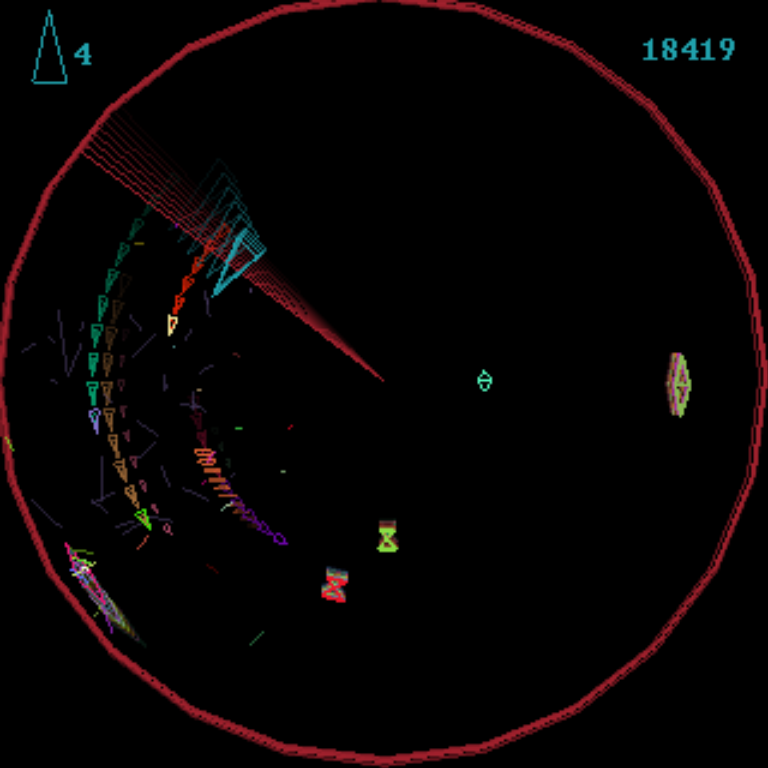
R-Theta 2: Expanded Edition is a game based in polar coordinates. Every point in the game is assigned a radius and theta value, denoting the distance of the point from the centre, as well as the angle it makes with the x-axis.

The player is in control of a triangular shooter, built into a constantly rotating radar-scope which must be protected from collision with other enemies. Use the up and down arrow keys to decrease or increase the ship's radius from the centre. Hold the X key for rapid fire, tap the C key to shoot and use the Z key to launch a destructive missile. Keys can be reconfigured by pressing the F2 function key at the title screen.

This updated version includes nine new enemies and an adjustable difficulty setting.

Name: R-Theta 2: Expanded Edition
Developer: Theta Games
Category: Action
Type: Freeware
Size: 2MB
Direct download link: Click here (Vista version)

Tuesday, March 26, 2019

How We Fought Bad Apps And Malicious Developers In 2018

Posted by Andrew Ahn, Product Manager, Google Play

Google Play is committed to providing a secure and safe platform for billions of Android users on their journey discovering and experiencing the apps they love and enjoy. To deliver against this commitment, we worked last year to improve our abuse detection technologies and systems, and significantly increased our team of product managers, engineers, policy experts, and operations leaders to fight against bad actors.

In 2018, we introduced a series of new policies to protect users from new abuse trends, detected and removed malicious developers faster, and stopped more malicious apps from entering the Google Play Store than ever before. The number of rejected app submissions increased by more than 55 percent, and we increased app suspensions by more than 66 percent. These increases can be attributed to our continued efforts to tighten policies to reduce the number of harmful apps on the Play Store, as well as our investments in automated protections and human review processes that play critical roles in identifying and enforcing on bad apps.

In addition to identifying and stopping bad apps from entering the Play Store, our Google Play Protect system now scans over 50 billion apps on users' devices each day to make sure apps installed on the device aren't behaving in harmful ways. With such protection, apps from Google Play are eight times less likely to harm a user's device than Android apps from other sources.

Here are some areas we've been focusing on in the last year and that will continue to be a priority for us in 2019:

Protecting User Privacy

Protecting users' data and privacy is a critical factor in building user trust. We've long required developers to limit their device permission requests to what's necessary to provide the features of an app. Also, to help users understand how their data is being used, we've required developers to provide prominent disclosures about the collection and use of sensitive user data. Last year, we rejected or removed tens of thousands of apps that weren't in compliance with Play's policies related to user data and privacy.

In October 2018, we announced a new policy restricting the use of the SMS and Call Log permissions to a limited number of cases, such as where an app has been selected as the user's default app for making calls or sending text messages. We've recently started to remove apps from Google Play that violate this policy. We plan to introduce additional policies for device permissions and user data throughout 2019.

Developer integrity

We find that over 80% of severe policy violations are conducted by repeat offenders and abusive developer networks. When malicious developers are banned, they often create new accounts or buy developer accounts on the black market in order to come back to Google Play. We've further enhanced our clustering and account matching technologies, and by combining these technologies with the expertise of our human reviewers, we've made it more difficult for spammy developer networks to gain installs by blocking their apps from being published in the first place.

Harmful app contents and behaviors

As mentioned in last year's blog post, we fought against hundreds of thousands of impersonators, apps with inappropriate content, and Potentially Harmful Applications (PHAs). In a continued fight against these types of apps, not only do we apply advanced machine learning models to spot suspicious apps, we also conduct static and dynamic analyses, intelligently use user engagement and feedback data, and leverage skilled human reviews, which have helped in finding more bad apps with higher accuracy and efficiency.

Despite our enhanced and added layers of defense against bad apps, we know bad actors will continue to try to evade our systems by changing their tactics and cloaking bad behaviors. We will continue to enhance our capabilities to counter such adversarial behavior, and work relentlessly to provide our users with a secure and safe app store.

How useful did you find this blog post?

WWE 2K Android (Data + APK)

Download WWE 2K Apk + Data

How To Increase Your Twitch Viewer Numbers Without Burnout (Monday Musings 66)

Avg viewership drop!
At one point, I was thinking of writing down steps that will guarantee increase in your Twitch viewer numbers, but the problem is these steps may lead to burnout.

Once you burnout and take time off from streaming, your viewer numbers will decrease, so following the "fastest" techniques of gaining viewership may in fact backfire.

Sadly, it seems to be true that if you take 1 to 2 weeks off to refresh in a sudden and unannounced manner, your numbers may drop when you return.

The other unfortunate news in focusing on viewership numbers is if a crisis happens and you have to take time off, your numbers will drop. The conclusion is not to worry about the numbers, but if you really want to grow without burning out, this post is for you!

In other words, we need to find ways to avoid the inevitable burn-out of streaming so that you necessarily do not need to take too much time off from streaming, as consistency in following a schedule is the best way to gain and increase viewership.

These steps may lead to very slow viewer number increase, but it's better than crashing and burning like what happened to me. Indeed, coming back after a few weeks of re-evaluating things, my viewership numbers dropped by a whopping 50%. Note how it says -9 from last stream, total of 9 (exhibit A)!

Enjoy The Game
The first step is to play a game that you truly enjoy and find fun to stream. I decided to stream Borderlands 2 as a challenge to myself as I never succeeded in FPS games, and my community loves this game (a lot of Dark Souls fans also love Borderlands 2). Also the game has perfect Twitch game statistics (see below for details).

However, Borderlands 2 was a struggle to play, leading to many deaths and cringe-worthy gaming, and I wasn't enjoying streaming the game. My streams call to mind the unjust stereotype of women being bad at games. Although I recognize it as a masterpiece, it was not fun to stream for me, because of the demanding nature, and definitely a game that's more fun to play off-stream, which I intend to do.

Therefore, if you're a new streamer, it's so hard to focus and concentrate, not to mention on a game you're not familiar with. In other words, chose 5 games that you're really good at and that you love playing to start out with, and that your community would enjoy watching.

If you're a seasoned streamer, ignore this step and play whatever game you want as long as it falls in the "correct" Twitch game statistics if you want to continue to gain viewer numbers.

Twitch Game Statistics

Next, go to Twitch and type in the title of your games in question. If it's Fortnite Battle Royale that you're thinking, you'll see that all the large streamers will be on the first 20 pages, and then we relatively small streamers will be buried in the 5 trillionth page. No one is going to scroll through all those pages, rather, they'll click on the top page of streamers. You want a game where you will be near the top of the list.

Now, if the game you want to stream is Duck Tales Remastered, you'll see that there's a total of 0 viewers, so no one's looking for this game, except if a well known streamer like Shroud is somehow playing the game then there might be 30,000 viewers plus. But they're just watching the game coincidentally because it's Shroud, and not the game for itself. That again is a bad choice.

However, if the game you love and know very well like the back of your hand is Borderlands 2, that's a superb choice because it has a good number of viewers who actively look for the game. If you go to Twitch, you'll see that the top 2 channels will have about 50 to 75 viewers, then the next few channels will be around 20 to 30, and then your channel will be in the first page. Therefore, viewers looking for the game might chose your channel.

If they like your stream, you'll most likely get a follower and possibly loyal viewer. That'll surely increase your views, albeit very slowly.

Facecam
If the viewers looking for Borderlands 2 are looking at channels and see you on Facecam, they'll more likely click on your channel then a channel without, all things being equal (obviously a streamer like Lirik who doesn't use Facecam will get almost all the viewers, but Lirik is the exception).

Schedule
I thought an afternoon schedule would be just as good for me and my viewers, b/c it's a good time for the UK/EU audience who'll watch after work. However, I'm more of a morning person, and prefer to get all my "chores" done so I can have the rest of the day off.

It may seems like a red flag when I call streaming a "chore" but the reality is, even though it's fun (as long as I don't worry about viewership numbers), streaming is work being so demanding. It takes so much effort to play the game well, and read and talk to chat, being entertaining.

Indeed, engaging your audience will keep and increase viewership numbers. You can't expect to play a game without discussion, unless you're one of the few absolutely incredible challenge runners, and even then, they talk to chat.

After moving to morning schedule, it worked better for me because I don't have to fret and worry until 1 PM EST (that was my past schedule) about streaming. I can get it over and done with and move on.

When you start out, feel free to experiment which schedule works the best for you which may take a couple of weeks or so, and then try to pin down the exact hour you want to stream and stick with that schedule if possible. Indeed, anytime you change hours, your viewers will drop, so it's okay to experiment with your schedule when you start out with streaming.

Certainly, once you really like your schedule and you feel comfortable with it, keep that schedule until something comes up such as new job and the like.

In your channel panel description, I would recommend adding the stream elements or streamlab schedule countdown.

Mention in a "Schedule" channel panel that you'll stream one hour for the day(s) you're interested, in case there are days when you don't feel like streaming the "ideal" 4 hours or more. The mistake I made was starting out 4 days/week at 4 hrs/day. However, even though you note you're streaming 1 hour, you can always stream longer than 1 hour.

Once you feel that streaming 1 hour is "easy" then you can advertise that you'll stream 1.5 or 2 hours and so forth.

The rationale is that you can always stream longer, but you can never stream shorter than what your viewers expect per your schedule.

The reason why you want a set hour is so your viewers will know when to tune in when you're streaming, much like television shows. Even TV has recording and your videos can be re-watched (on Twitch dashboard, channels, turn on store past broadcasts), but the issue is you need live viewers for them to count in the demanding Twitch world.

Time Off?
Once you notice that you have a few viewers (or more) who chat in your channel and are at your streams faithfully, I think you can take time off, maybe 1 week at most, and your viewers might not drop that much when you return, because your faithful viewers will return to see you.

"But it's only 1 week," you ask, but in the world of Twitch, taking a week off is like an eternity.

Make sure you announce in advance that you'll be taking off and you'll be fine when you return.

Taking time off is crucial in preventing burn-out and then quitting streaming entirely, so if you feel burned out the 2nd or 3rd month of streaming, make sure you announce a 1 week vacation to your chat constantly so they're aware.

Again, the fact that maximum of 1 week off may be considered even "too much" if you want to keep your viewers, demonstrates the ultra-competitive nature of Twitch streaming.

Conclusion:
  1. Find a game that is easy for you to play and that you absolutely love so your enthusiasm shines through in your streaming.
  2. Make sure this game will have your channel in the top of streamers streaming the game, with adequate number of viewers watching the game (type the game title in Twitch search bar).
  3. Facecam
  4. Set schedule that works for YOU.
  5. Time off when you notice you have a handful of faithful viewers, but if you start burning out before then, take time off, maximum maybe 1 week.
I'm hoping that these relatively painless steps will improve your viewership numbers but without the burn-out.

I can write about how to network to gain viewers, but I find it unhealthy so if I ever do, it'll be a huge caveat for that post.

However, the best advice I can give is to not worry about your viewership numbers, but rather enjoy the process of streaming, improving content, and being with your community, which is what I'm focusing on now and loving it!

Are you a streamer, and what other painless tips will help improve viewership numbers? Do you want to read about networking to increase your numbers in a future post?

The How of Happiness Review

Saturday, March 23, 2019

ouo.io - Make short links and earn the biggest money


Shrink and Share

Signup for an account in just 2 minutes. Once you've completed your registration just start creating short URLs and sharing the links with your family and friends.
You'll be paid for any views outside of your account.

Save you time and effort

ouo.io have a simple and convenient user interface, and a variety of utilities.
We also provides full mobile supports, you can even shorten the URL and view the stats on a mobile device.